Enamelled cast iron or stainless steel plancha: which one should you pick?
If you cook outdoors often, the material of the plate matters as much as its size. Enamelled cast iron and stainless steel each have their fans: here's how they behave in daily use, and which one suits the way you cook.
24 November 2026
By Marine Ferreira, Head of Marketing and Communications, Le Marquier – 24 November 2026
Enamelled cast iron holds heat better and suits thick cuts that need a good sear. Stainless steel is lighter, heats up quickly and cleans fast.
Two materials, two personalities
Neither one is simply "the best". Enamelled cast iron is heavy and dense: it stores heat and gives it back steadily. Stainless steel is lighter, stands up very well to corrosion and cleans quickly, with a bright, very contemporary finish.
The right choice depends on what you cook, how often you fire up the plancha, the look you're after and your budget.
Enamelled cast iron: steady heat for a good sear
Cast iron holds its temperature. Once it's hot, it stays stable, even when a cold steak lands on it. That's a real advantage for searing meat, colouring a duck breast, cooking king prawns or grilling thicker vegetables.
The enamel gives a smooth surface that's easy to clean and protects against rust. It still deserves some care: no sudden thermal shocks, no sharp utensils.
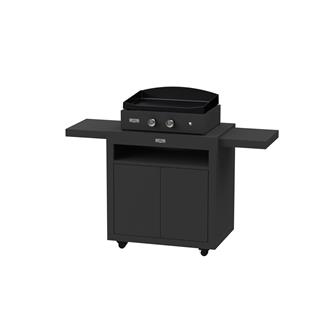
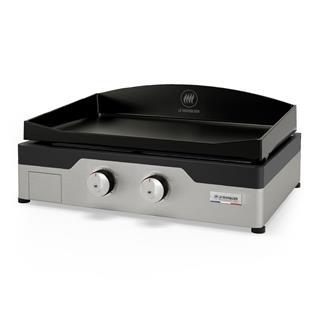
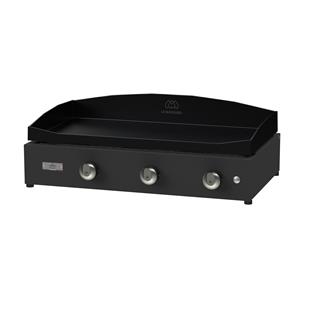
At Le Marquier, this is the material of the Pure range, in 260 and 375, in a black finish. It appeals to cooks who like a big plate and even cooking.

Stainless steel: light, responsive, easy to live with
Stainless steel resists corrosion, cleans up without fuss and generally heats up quickly. It's lighter to move around, and its bright finish sits nicely in a modern outdoor kitchen. The trade-off is that it needs a little care to keep its shine.
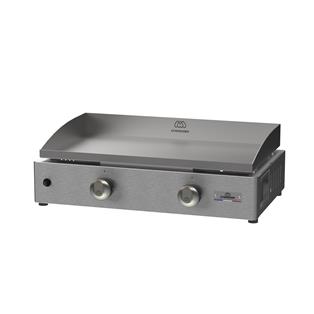
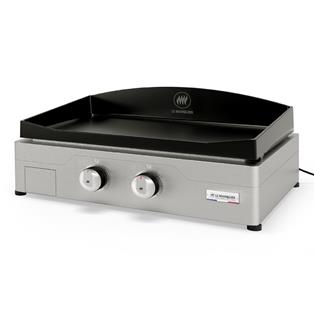
In the range, the Plancha Inox Gas 260 is the way in for anyone who wants stainless steel without breaking the bank (recommended retail price €399 incl. VAT). The Allure plancha, also in stainless steel, comes in gas Duo (€599) and electric 260 (€699), with a more refined finish.

The comparison in a nutshell
| Criterion | Enamelled cast iron | Stainless steel |
|---|---|---|
| Heat retention | Steadier: the plate stores heat and gives it back evenly | Less steady |
| Heating up | Less quick | Generally quicker |
| Weight | Heavy and dense | Lighter to handle |
| Upkeep | Cleans easily; avoid sudden thermal shocks and sharp utensils | Cleans quickly; needs a little care to keep its shine |
| Look | Understated and deep (black finish) | Bright and modern |
| Budget | Affordable models: Pure range, 260 and 375 | Affordable models: Plancha Inox Gas 260, Allure |
| Best for | Cooks who like to sear thick cuts on a big plate | Contemporary outdoor kitchens and easy day-to-day use |
What kind of cook are you?
Do you like to sear and mark thick cuts? Enamelled cast iron is a safe bet. Do you entertain often and need space? Look at the Pure 375, or further up the range the Amalia Pro and Exclusive. Are you putting together an outdoor kitchen with a contemporary look and stainless steel units? The Allure or the Inox 260 pair very well with the stainless steel corners and splashbacks in the range.
The models worth a close look
Plancha Pure Gas 260 Black (recommended retail price €499 incl. VAT) and Pure Gas 375 Black (€599). The 375 gives plenty of surface for those who entertain. An Edition version with a side table is available at €999.
Plancha Allure Gas 260 Duo (€599) and Allure Electric 260 Stainless Steel (€699). Two cooking zones in gas, or an electric version, for stainless steel lovers.
Plancha Inox Gas 260 (€399). Stainless steel at a friendly price.
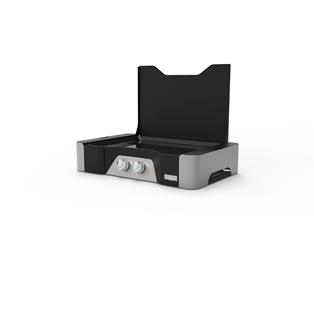
To aim higher, the Exclusive range (lid included, up to the XL Duo model) and the Amalia Pro in 360 or 375 offer generous cooking surfaces, in black or stainless steel.
Frequently asked questions
Does enamelled cast iron rust?
The enamel protects the cast iron, as long as it isn't damaged. Avoid knocks and sharp objects.
Is stainless steel easier to look after?
It cleans quickly, but you need to spend a little time on it to keep it shiny.
Which material for heavy use?
Both hold up. Many people prefer cast iron for strongly seared cooking.
Discover our products

saved