
Barbecue in 2026: How to Choose Between Gas, Electric, Charcoal, or Pellets?
Find the barbecue that suits your needs.
14 April 2026
The Art of Barbecue in 2026: Which model is right for you?
Summer is approaching, and with it comes the desire to share convivial moments around a good barbecue. But in 2026, the options are more numerous than ever: gas, electric, charcoal, or pellets? Each type of barbecue has its advantages, disadvantages, and—above all—its own specific characteristics in terms of taste, practicality, and environmental impact.
Between technological innovation, changing consumer expectations, and the pursuit of culinary excellence, barbecuing is no longer just about a simple grill and charcoal.
In this guide, we help you see things more clearly so you can choose the barbecue that perfectly matches your needs.
Key criteria to consider before buying:
Before diving into the details, here are the essential points to evaluate for making the right choice:
- Taste: What kind of flavor are you looking for?
- Practicality: Ease of use, cleaning, and preheating time.
- Eco-friendliness: Environmental impact, smoke, and type of fuel.
- Budget: Purchase price, cost of use, and maintenance.
- Space: Balcony, terrace, or garden?

Comparison of the 4 Types of Barbecues in 2026
1. Charcoal Barbecue: The Undisputed Classic?
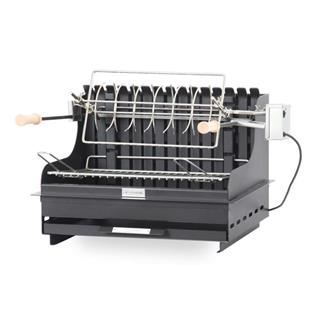
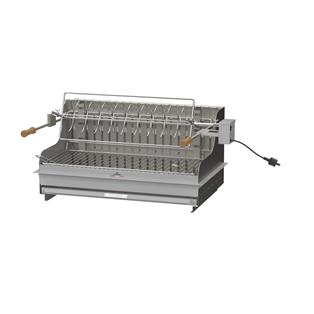
The charcoal barbecue is the traditional option. It uses charcoal as fuel, producing intense heat and a smoky flavor beloved by purists. Lighting is manual and can take between 15 and 30 minutes, depending on the method used (fire starters, chimney starter, etc.). This type of barbecue can reach very high temperatures, ideal for grilling and quick cooking. However, temperature control is less precise and requires experience. Cleaning after use is also more tedious, as you need to remove ashes and residue.
✅ Advantages:
- Smoky flavor, highly appreciated by purists.
- Generally affordable purchase price.
- Versatile: Ideal for large grilling sessions.
❌ Disadvantages:
- Long preheating time (20-30 minutes).
- Tedious cleaning (ashes, residue).
- Environmental impact: CO₂ emissions and fine particles.
- Difficult temperature control for beginners.
💡 For whom? Enthusiasts of authentic flavors, willing to invest time and effort.
2. Gas Barbecue: Practicality First
The gas barbecue operates using propane or butane stored in a gas cylinder. Heat is generated by burners located beneath the cooking grill, allowing for instant ignition via control knobs. This type of barbecue is particularly appreciated for its practicality: no need to wait for the fuel to be ready, and cleaning is simplified as it produces little ash. However, some grilling enthusiasts miss the smoky flavor characteristic of traditional barbecues. Additionally, the cost of gas can be high in the long run, and you must always have a spare cylinder on hand.
✅ Advantages:
- Instant ignition and precise temperature control.
- Easy cleaning (few residues).
- More eco-friendly (less polluting than charcoal).
❌ Disadvantages:
- No smoky flavor.
- Cost of gas (refilling cylinders).
- Higher initial investment.
💡 For whom? Those who want a quick, clean, and hassle-free barbecue.
3. Electric Barbecue: The Urban and Minimalist Option
The electric barbecue uses an electric resistance to heat the cooking grill. Simply plug it into an electrical outlet to get it working. This type of barbecue is ideal for small spaces, such as balconies or terraces, provided its use is permitted there. Its main advantage lies in its simplicity: no fuel to manage, easy ignition and temperature adjustment, and minimal maintenance. However, it does not produce a smoky flavor, and its limited power makes it less suitable for cooking large quantities or thick cuts.
✅ Advantages:
- Practical: Electric plug-in, no fuel to store.
- Ideal for small spaces (balconies, terraces).
- Simplified cleaning and minimal smoke.
❌ Disadvantages:
- Neutral taste.
- Limited power (depends on the electrical outlet).
- Less suitable for large gatherings.
💡 For whom? Urban dwellers or those seeking a simple, space-saving solution.
4. Pellet Barbecue: The Best of Both Worlds?
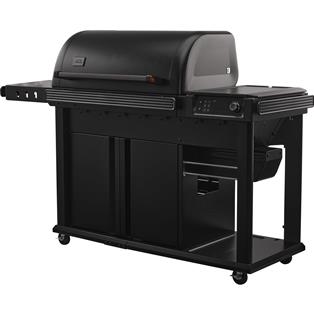
The pellet barbecue, or wood pellet grill, combines some of the advantages of charcoal and gas barbecues. It uses compressed wood pellets, which are automatically fed into a burner where they ignite to produce heat and smoke. Some models, like TRAEGER, are equipped with a thermostat for precise temperature control, making them ideal for slow cooking, such as smoking meats. The flavor obtained is the true taste of wood fire, thanks to the combustion of pellets, while offering great ease of use. These barbecues are aimed at people who appreciate the smoky flavor and require a slight learning curve to master all the possible options. Cleaning, while less cumbersome than with charcoal, is still necessary to remove ashes with a vacuum once the barbecue is turned off.
✅ Advantages:
- Natural smoky flavor (thanks to wood pellets).
- Precise temperature control (ideal for slow cooking).
- Eco-friendly: Natural fuel, low emissions.
- Autonomy (up to 10 hours with a full tank for long, low-temperature cooking).
- Versatility: Grilling, smoking, roasting…
❌ Disadvantages:
- Mainly available in specialized barbecue stores.
- Dependence on pellets (stock required).
💡 For whom? Those who want to combine flavor, eco-friendliness, and practicality without compromise!

Why the Pellet Barbecue Is Our Top Pick for 2026 ?
If we had to summarize, the pellet barbecue ticks almost all the boxes:
- Unmatched flavor, close to charcoal, but without the drawbacks.
- Simple and clean use, with temperature control worthy of professionals.
- Reduced environmental impact, thanks to a natural and renewable fuel.
- Exceptional versatility: grilling, smoking, slow cooking… It does it all!
In 2026, with growing ecological awareness and the desire to cook healthily and deliciously, the pellet barbecue is emerging as the solution of the future.
Conclusion: Which Barbecue to Buy in 2026?
- For purists: Charcoal (but be prepared for some extra work!).
- For the busy and urbanites: Gas or electric.
- For barbecue cooking enthusiasts: Pellets, no hesitation!
And you, which type of barbecue are you dreaming of for this summer? Share your preferences in the comments, and don’t hesitate to ask your questions!
Need help choosing your model? Check out our selection of the best pellet barbecues in 2026!

Discover our products